
Masjed-e Jadid-e Abbasi, Iran
The name Masjed-e Jadid-e Abbasi, which literally means “New Mosque of Abbas,” refers to the same monument that is also known as the Shah Mosque, the Imam Mosque, or the Abbasi Great Mosque. Constructed in the 17th century under the patronage of Shah Abbas I, it stands prominently on the southern side of Naqsh-e Jahan Square in Isfahan. This Safavid masterpiece is celebrated for its breathtaking turquoise dome, its monumental entrance framed by towering minarets, and its exquisite tilework that exemplifies the height of Persian-Islamic artistry.
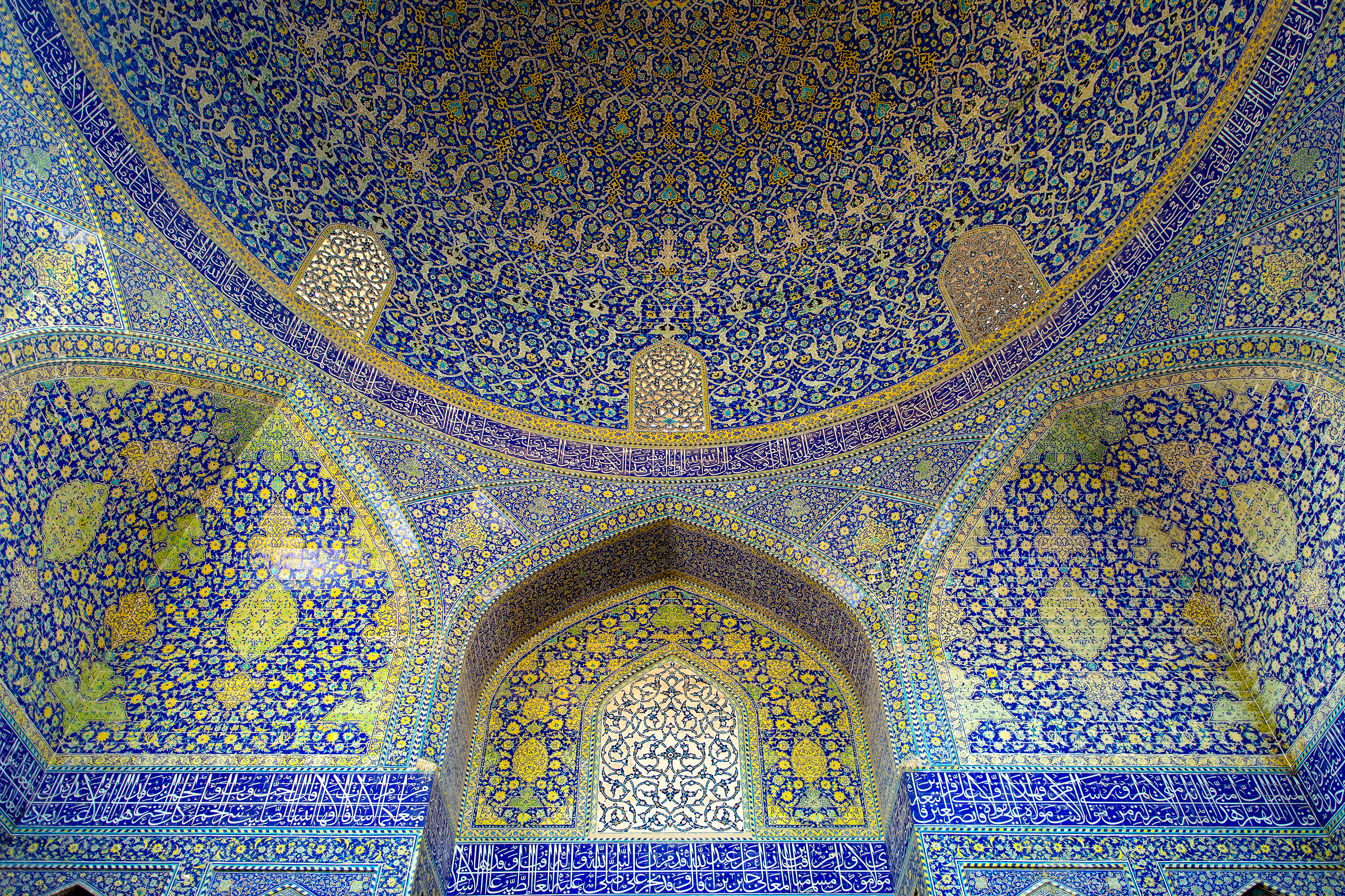
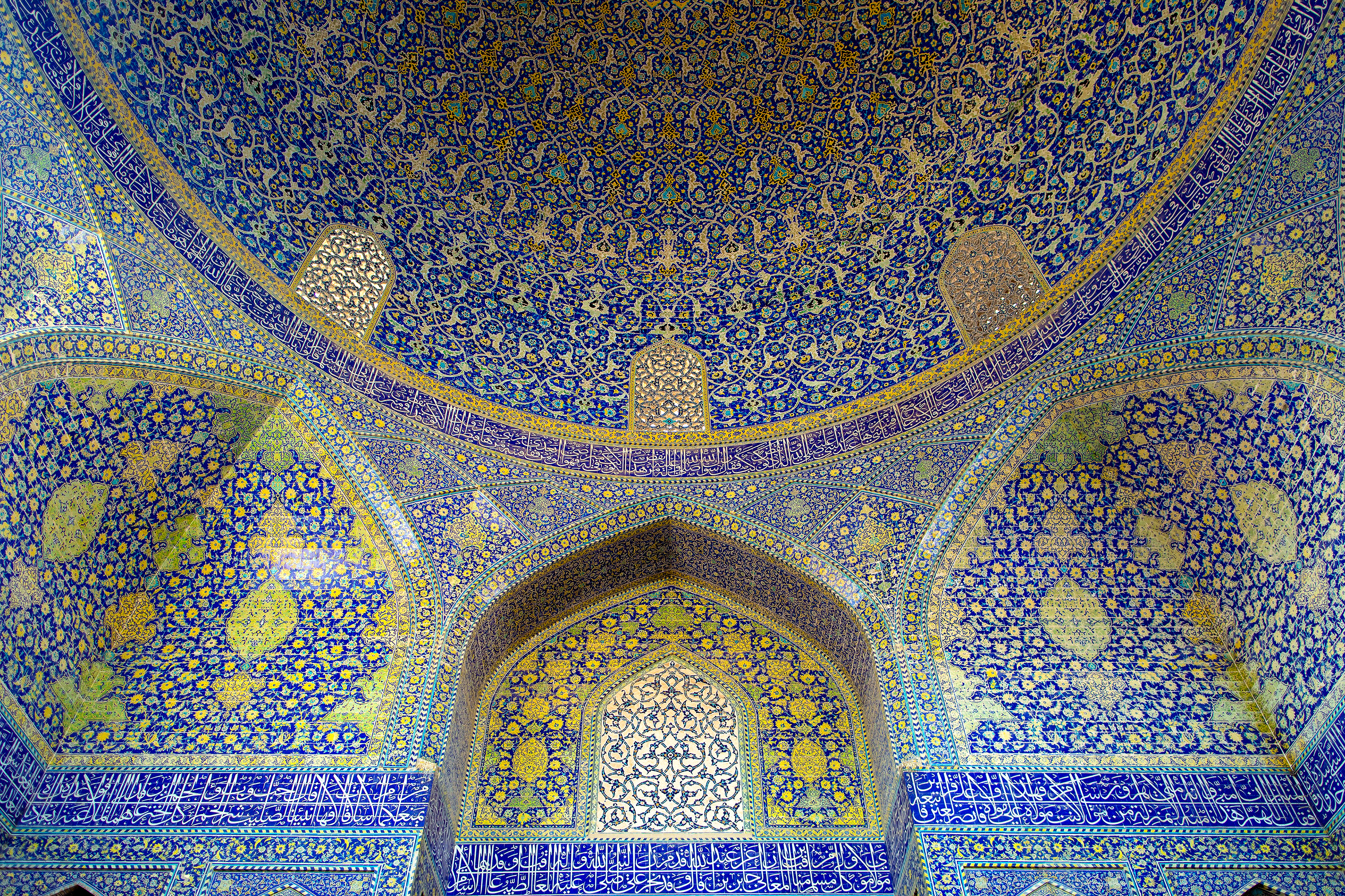
The interior reveals a soaring dome and upper arches fully enveloped in intricate Persian‑Islamic tilework. Deep blue, turquoise, yellow, and white glazes form dense, symmetrical compositions of geometric patterns and floral arabesques that radiate across the ceiling. Encircling the dome, sweeping bands of white thuluth calligraphy are seamlessly integrated into the tilework, emphasizing the structure’s spiritual and visual rhythm. The space feels vast, ornate, and meticulously crafted—an unmistakable expression of Safavid‑era mastery.
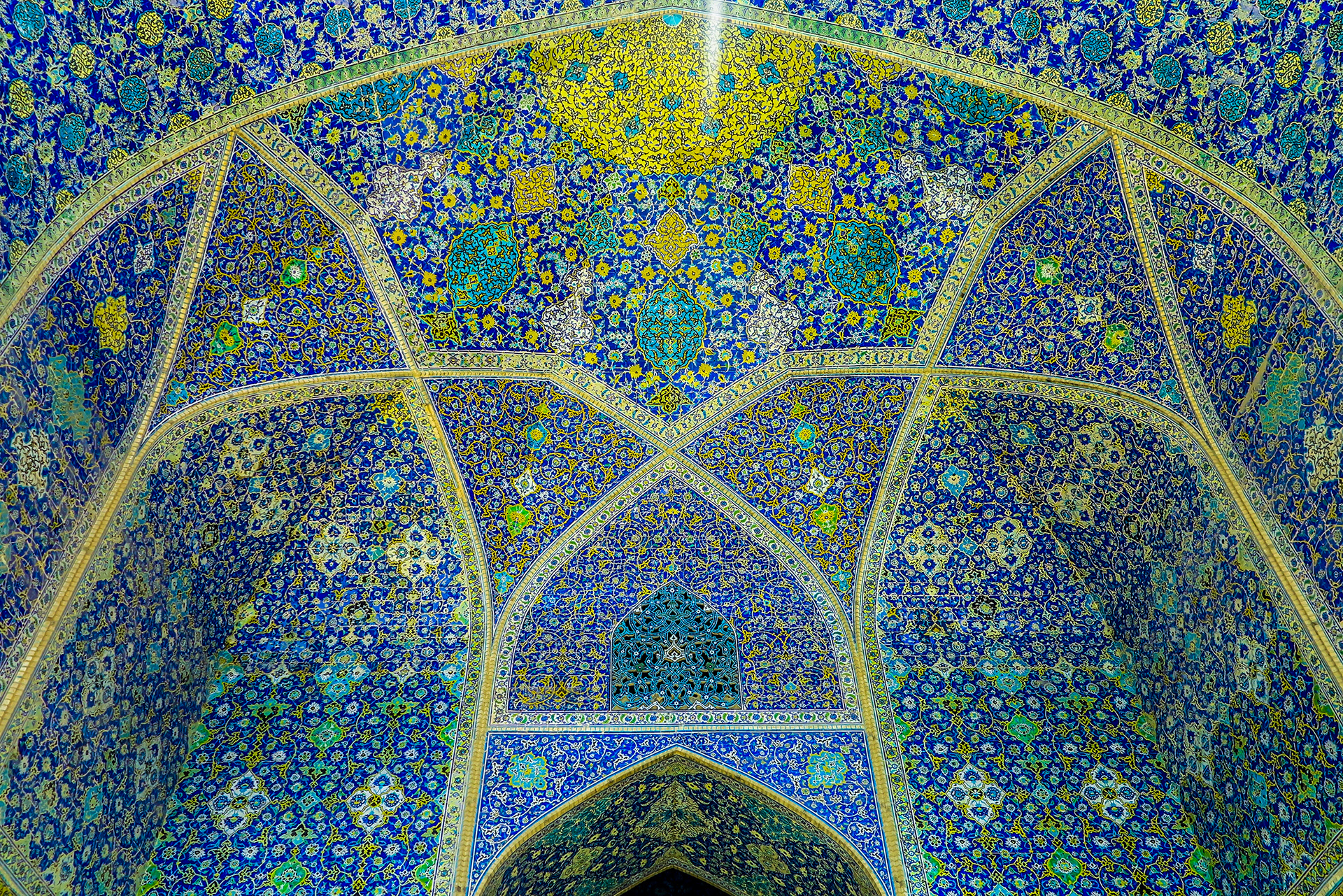
Cobalt, turquoise, gold, and white glazes form dense geometric grids, interlacing arabesques, and radiating star patterns that animate its domes and vaulted ceilings. Sweeping bands of white thuluth calligraphy frame the compositions, while layered muqarnas introduce depth and rhythmic shadow. The result is a cohesive, meticulously crafted interior that exemplifies the height of Safavid artistry and remains one of Iran’s most celebrated architectural masterpieces.
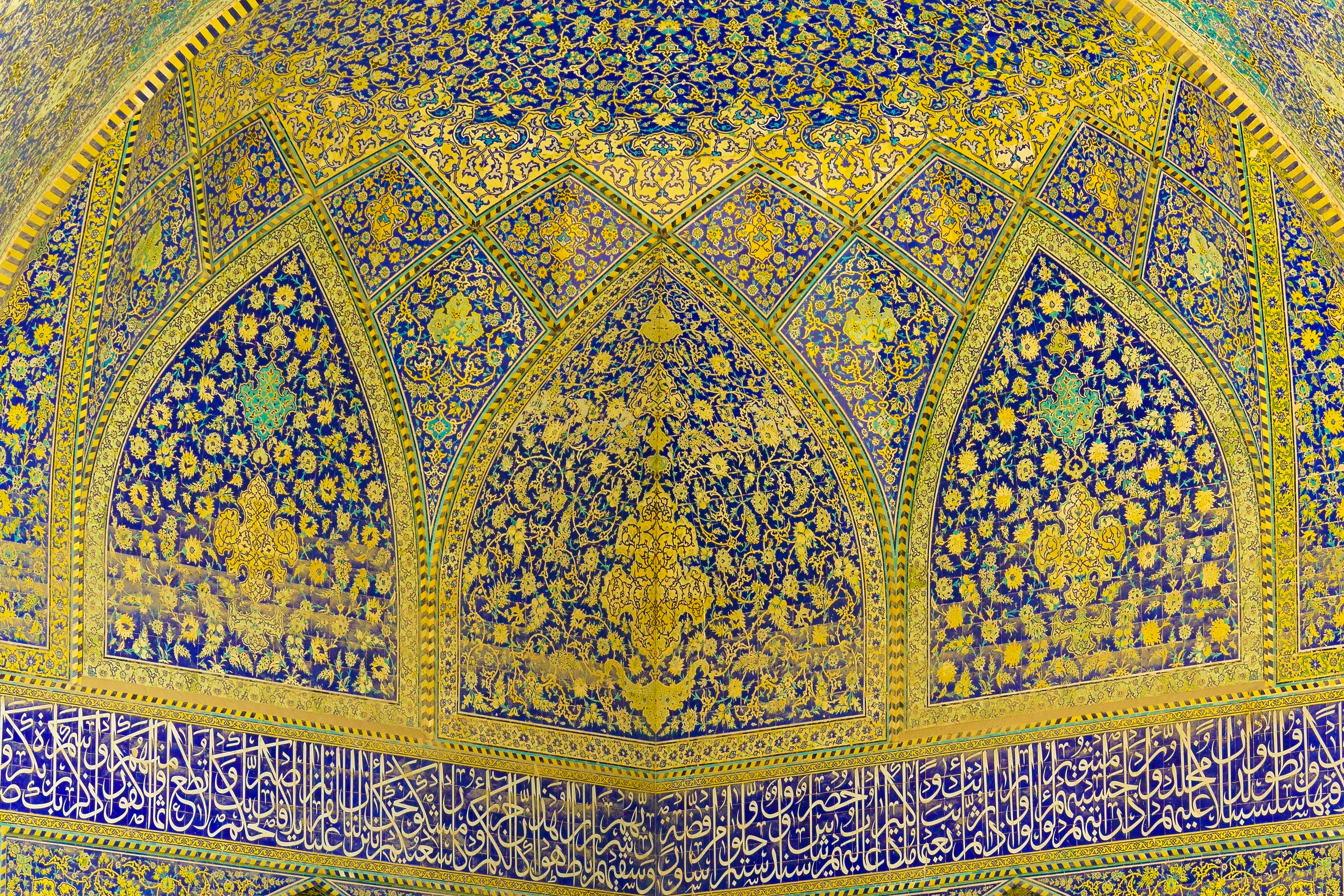
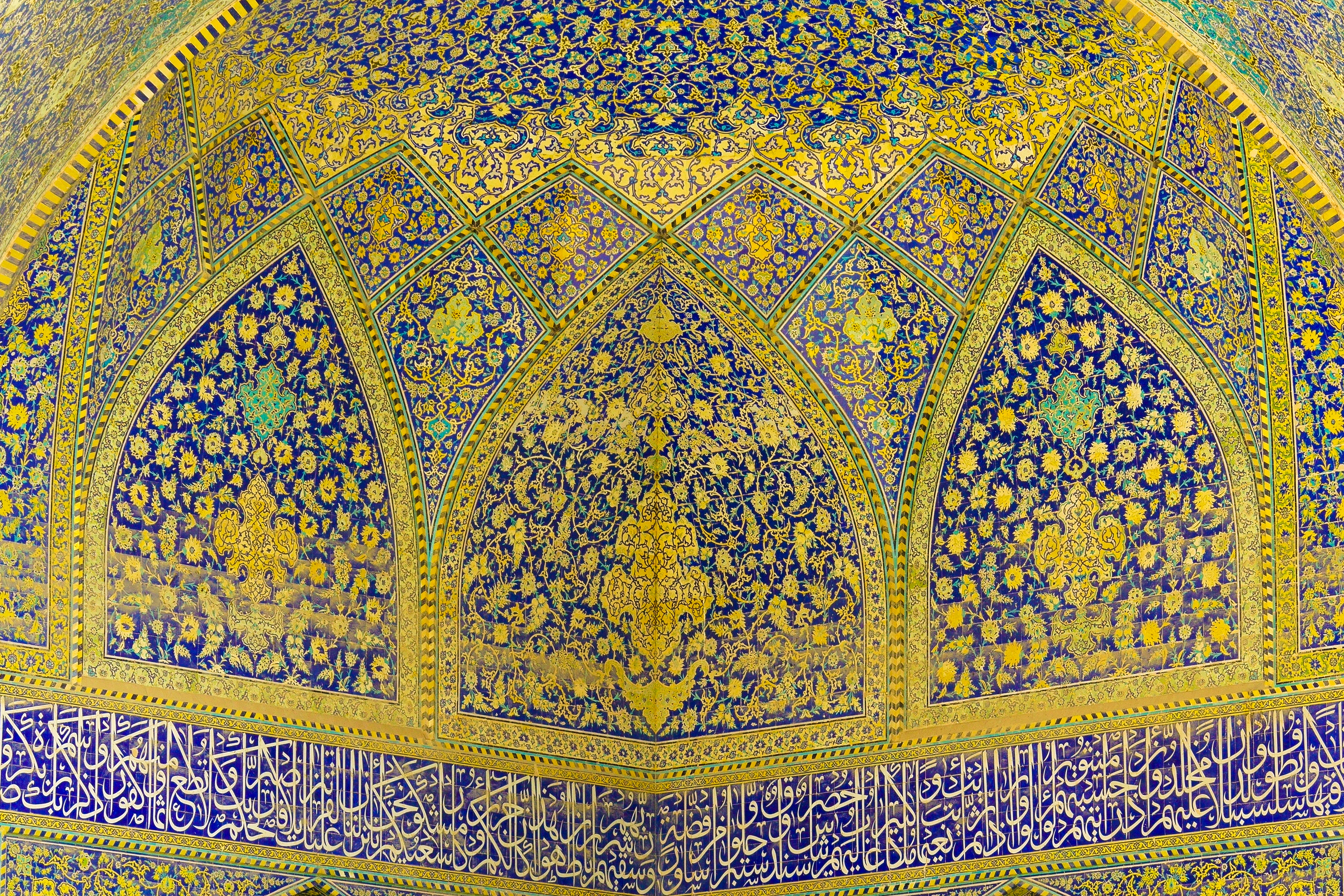
A close study of the Masjed‑e Jadid‑e Abbasi’s interior ornamentation reveals the height of Safavid craftsmanship, where layered geometry, radiant haft‑rang tilework, and stylized floral arabesques unfold across soaring iwans and vaulted surfaces. The mosque’s interior glows with cobalt, turquoise, and gold, arranged in meticulously patterned panels framed by sweeping Qur’anic inscription bands in white thuluth script.
The decorative program features pointed‑arch niches filled with interlaced floral motifs, geometric lattices, and star‑pattern grids, all rendered in vibrant blue and yellow glazes. Along the lower register, a continuous band of white calligraphy on deep blue tile anchors the composition, exemplifying the mosque’s fusion of architectural rhythm and luminous ceramic artistry.
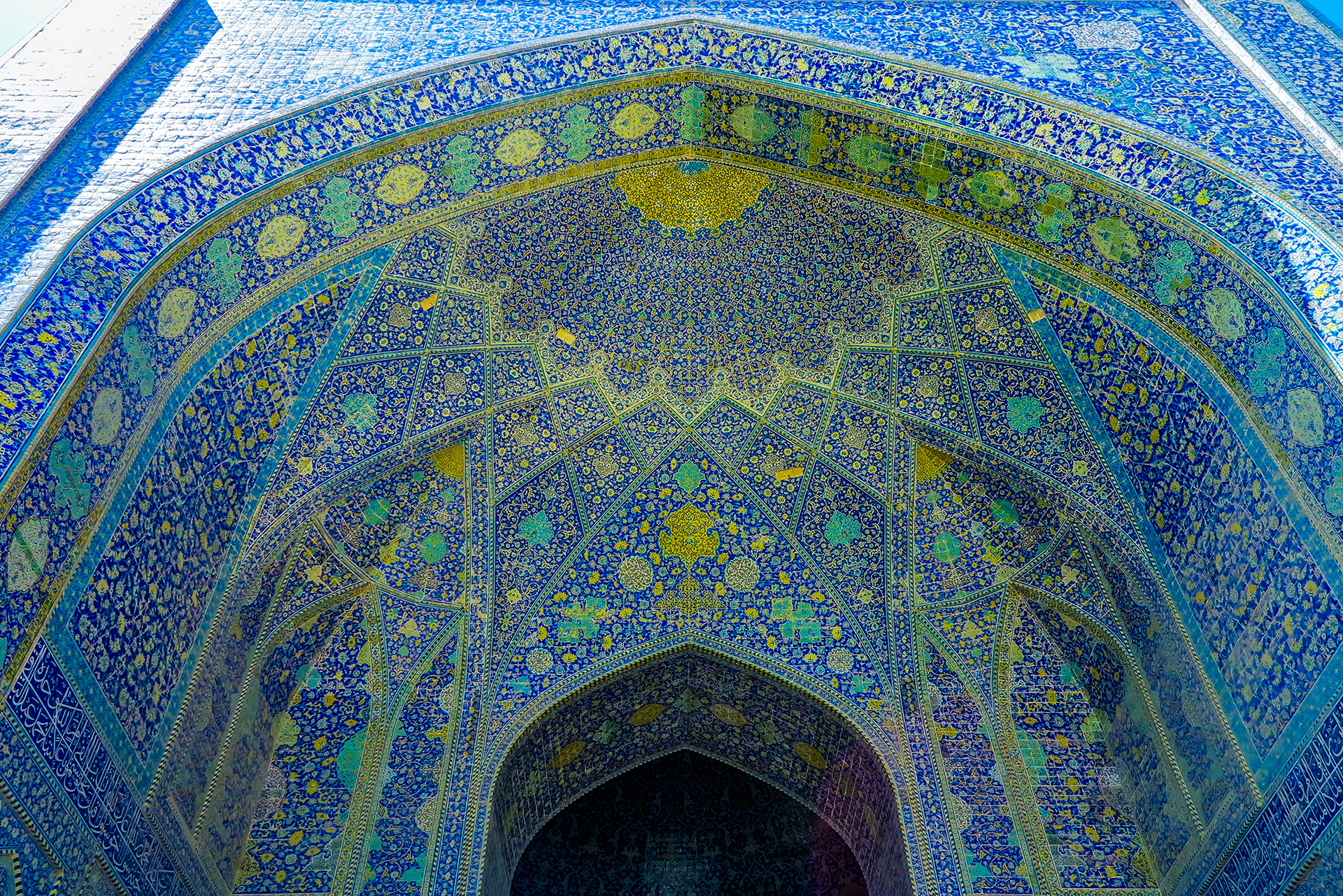
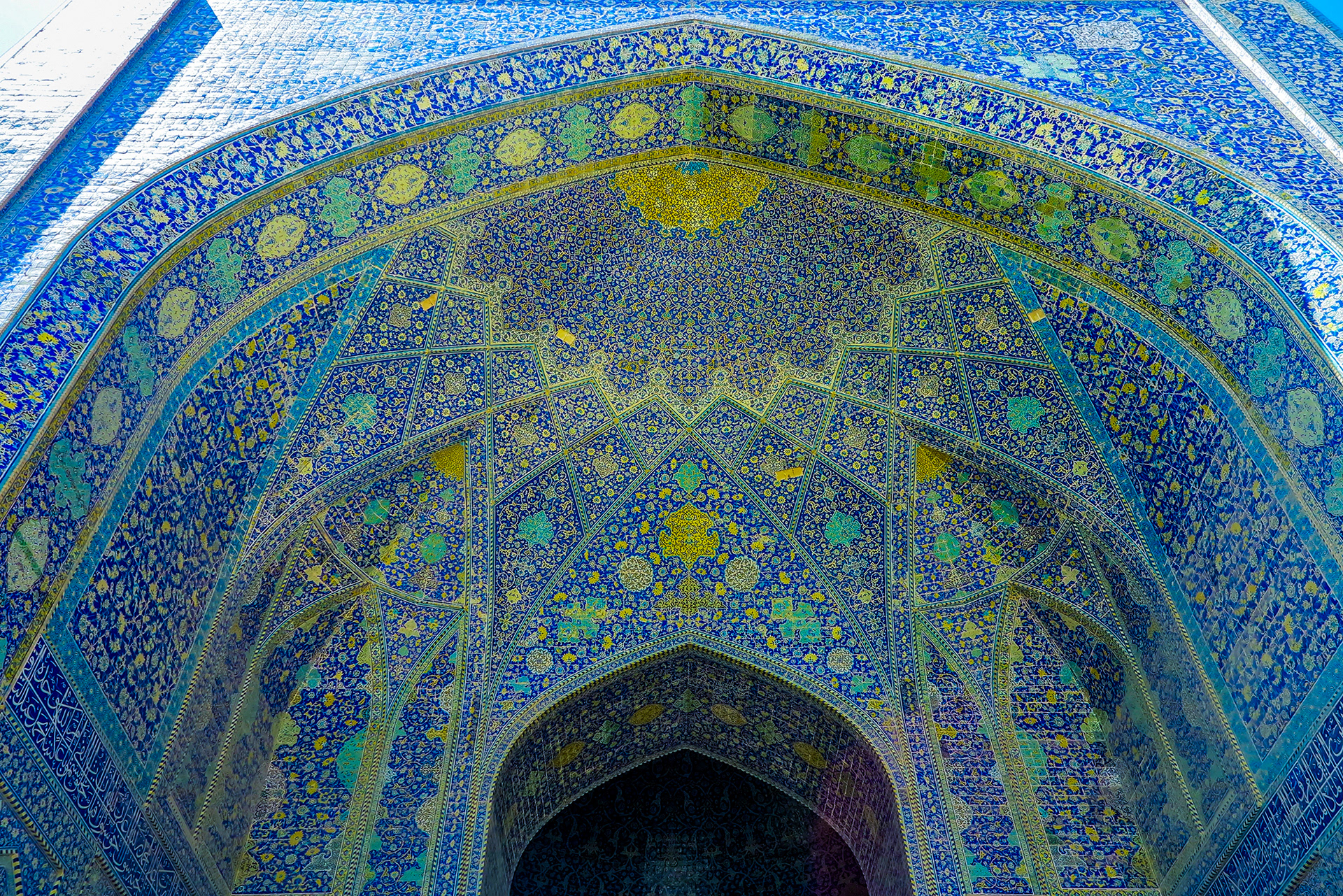
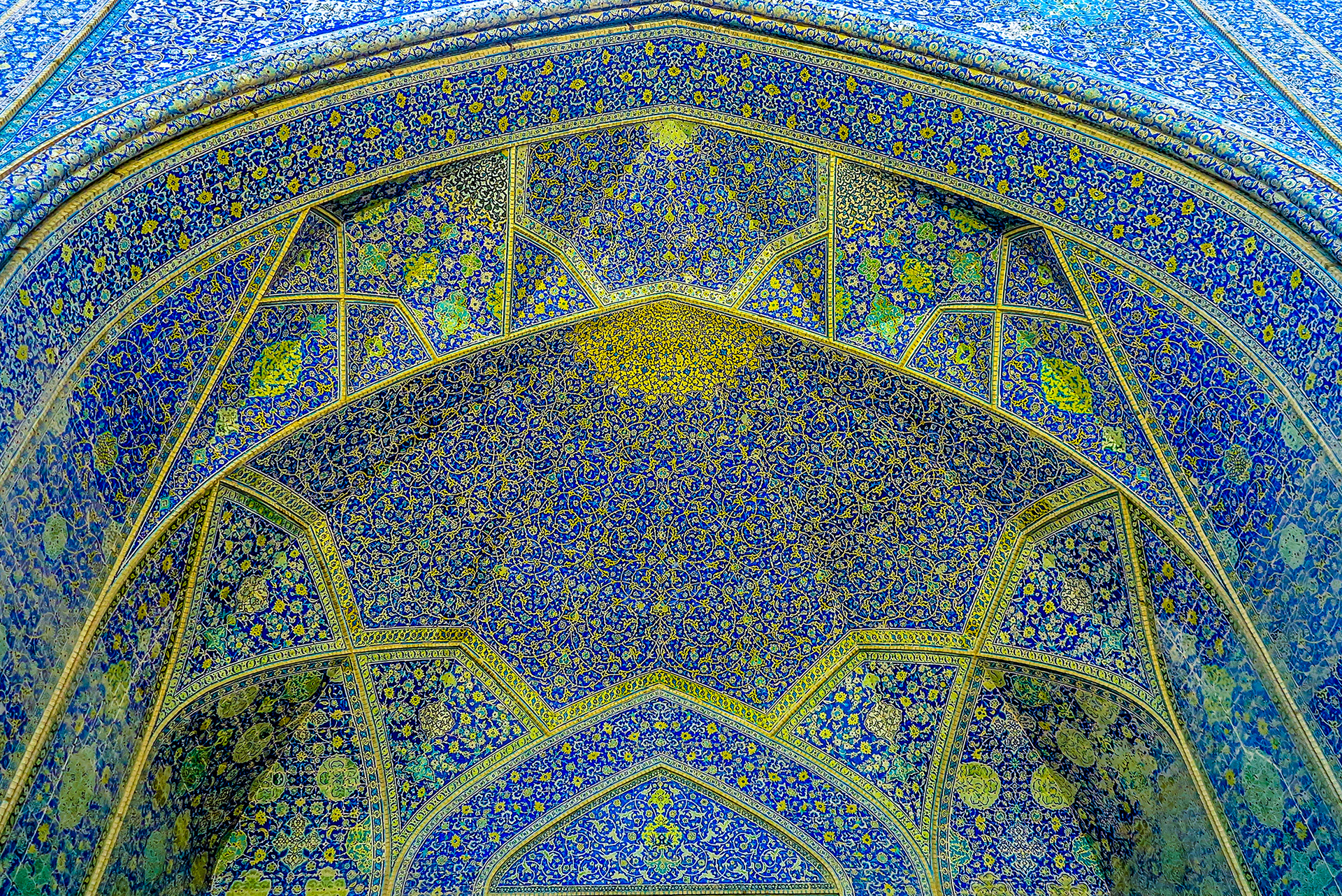
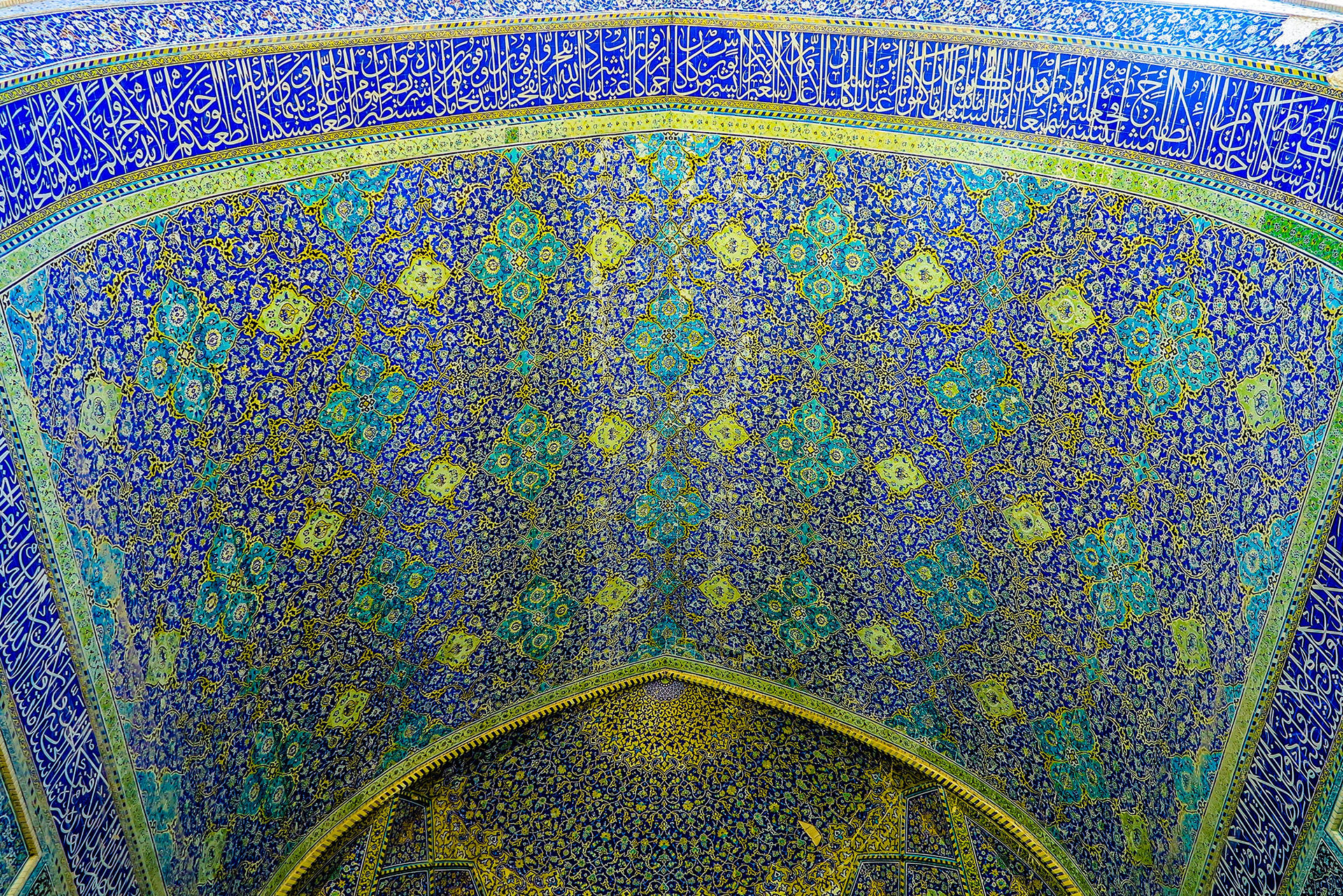
A close view reveals the Shah Mosque’s fully realized Safavid aesthetic: a unified tapestry of glazed tile, geometric precision, and cascading muqarnas that animates the archway. Turquoise, cobalt, and ochre mosaics form rhythmic grids of stars and interlacing arabesques, their surfaces framed by elegant bands of calligraphy. The composition reflects the Safavid mastery of color, symmetry, and spatial ornamentation, transforming the entrance into a luminous threshold of Persian craftsmanship.
The interior tilework continues this visual intensity, with dense geometric patterns, turquoise and cobalt mosaics, and tiered muqarnas vaulting arranged in perfectly balanced symmetry. Every surface is covered in interlacing floral motifs and calligraphic bands, showcasing the mosque’s cohesive Safavid design language and its role as one of the era’s most accomplished architectural achievements.
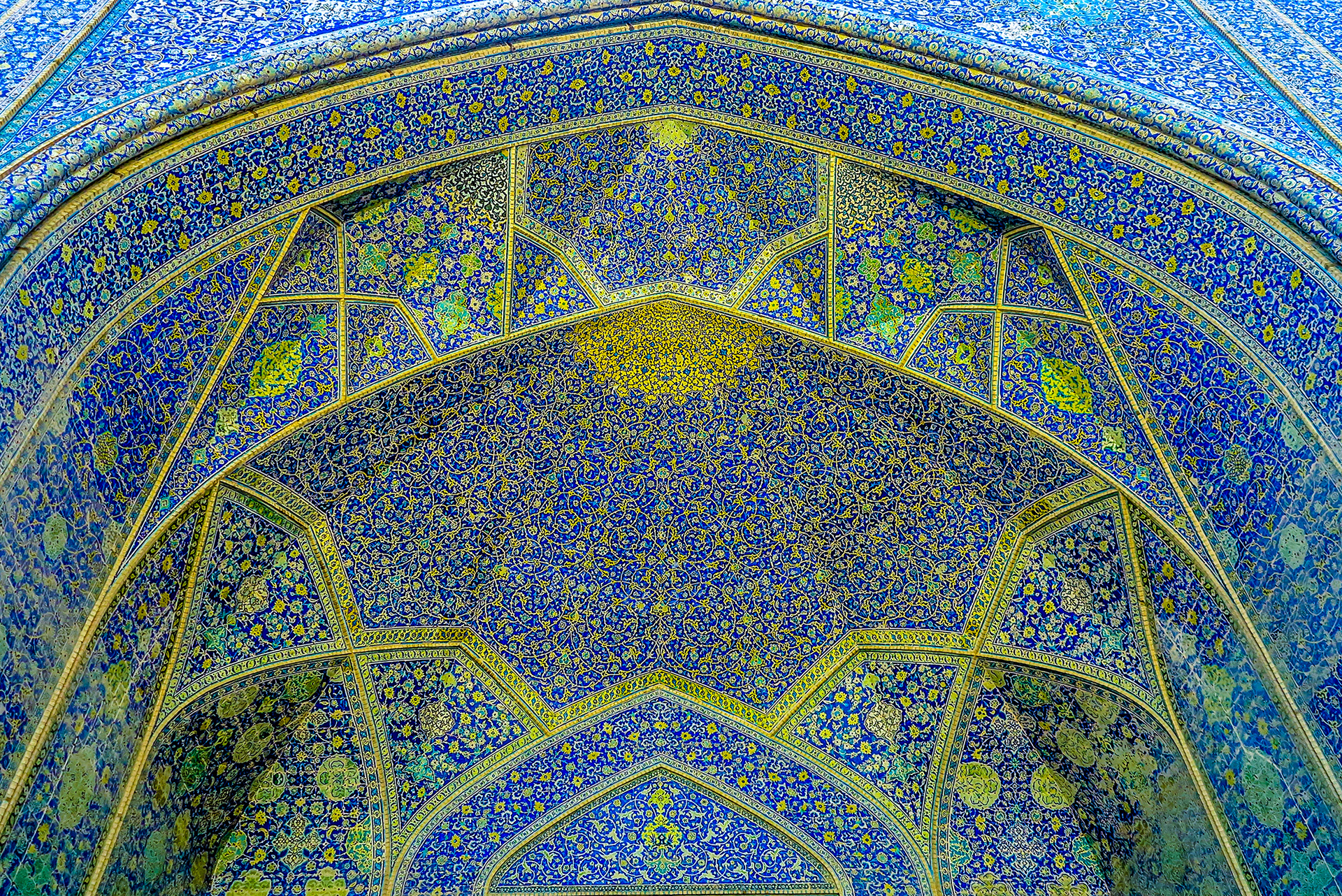
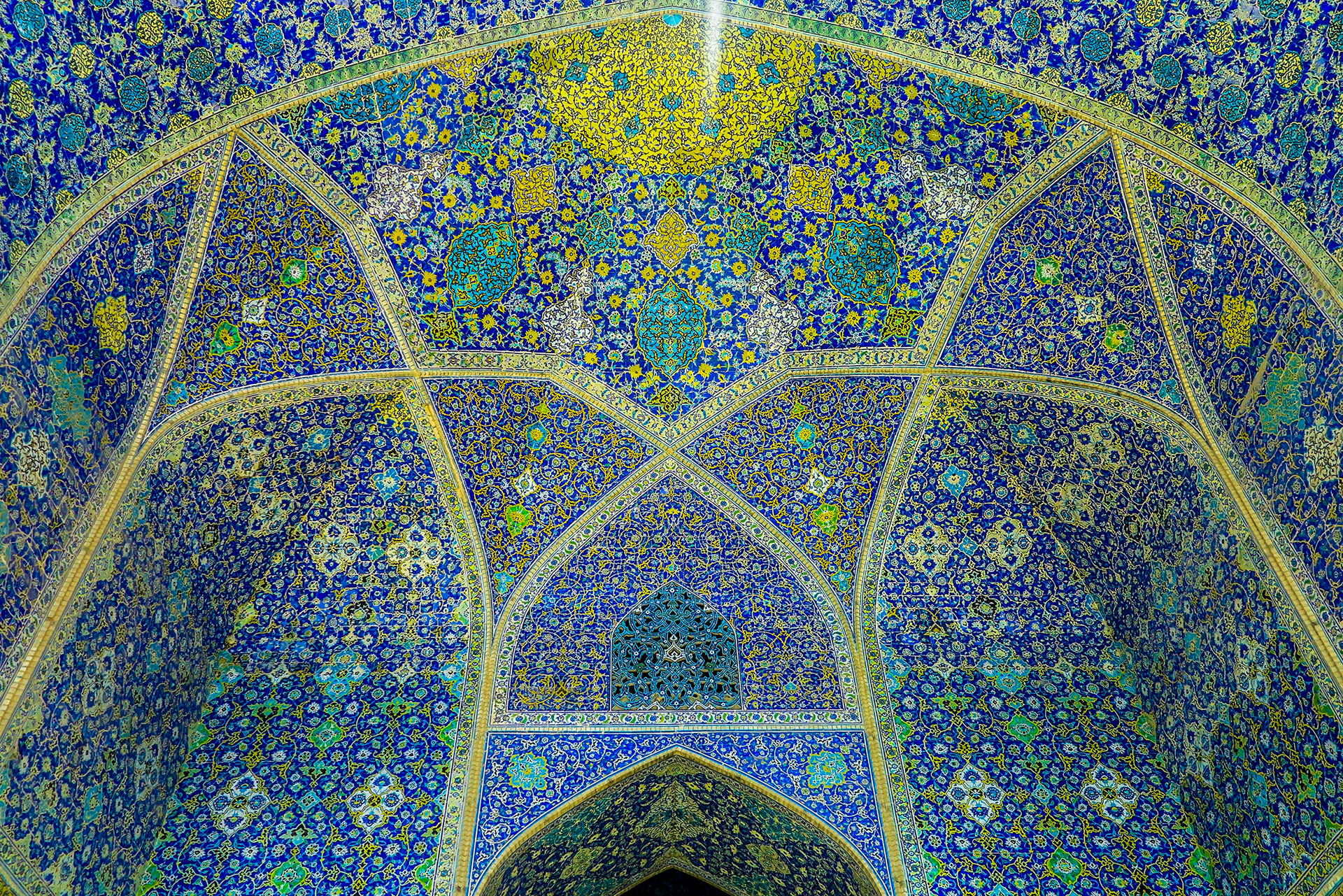
Muqarnas‑rich vaulting and luminous haft‑rang tilework define the interior of the Masjed‑e Jadid‑e Abbasi, where Safavid artisans transformed every surface into a field of geometric rhythm and floral intricacy. Turquoise, cobalt, yellow, and white glazes form interlocking star patterns, arabesque bands, and radiating compositions that animate the archway with depth and movement. The cascading muqarnas, fully clad in glazed tile, create a three‑dimensional tapestry that exemplifies the height of Safavid ornamental design.
The vault’s interior continues this visual density: layered muqarnas tiers, interlacing floral motifs, and precisely ordered geometric grids arranged in symmetrical harmony. The tilework’s saturated palette and crisp resist‑line detailing reflect the technical mastery of Safavid artisans, presenting a unified decorative program that stands among the most accomplished achievements of Persian architecture.
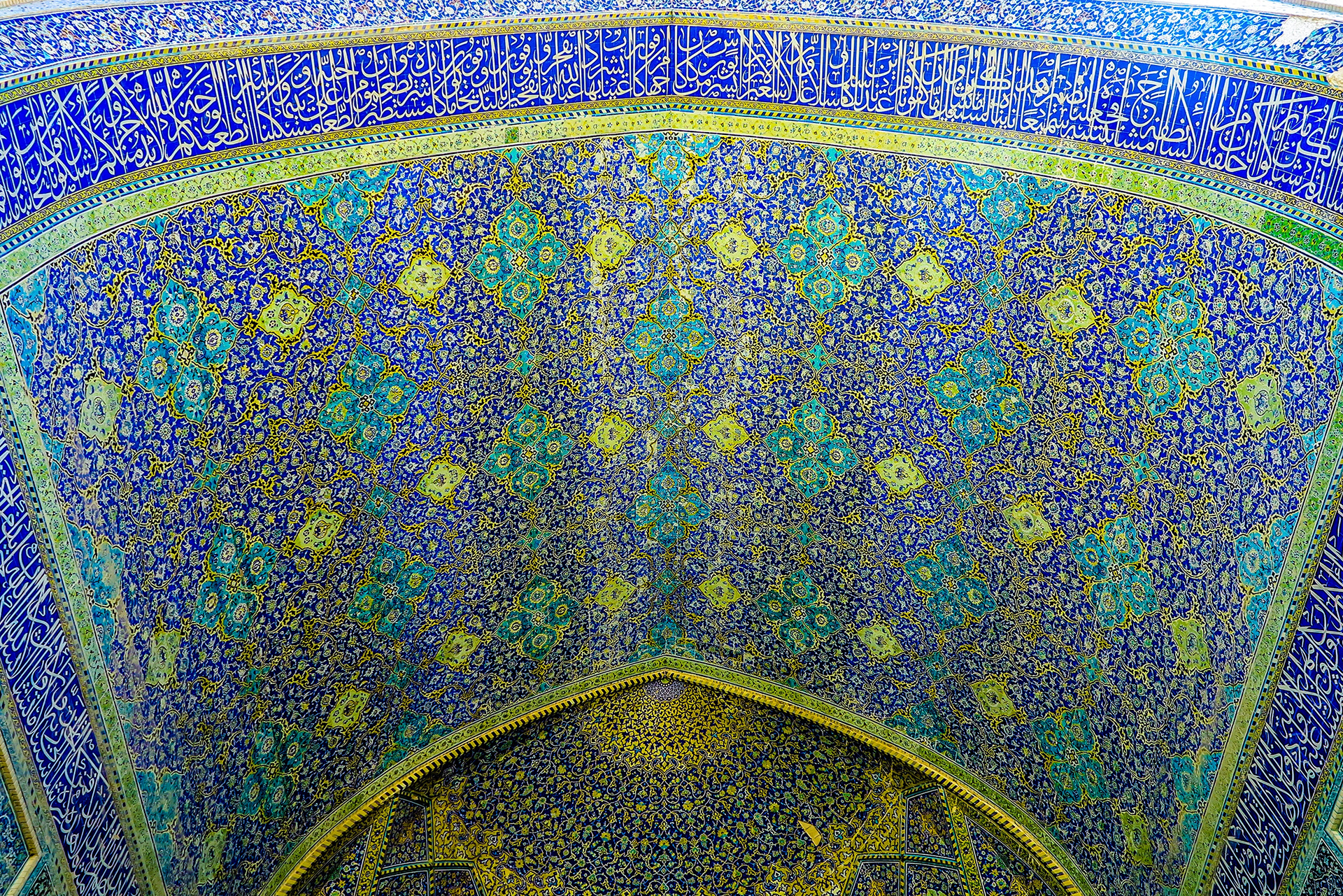
An ornate Safavid ceiling unfolds in layers of cobalt, turquoise, and gold, its surface woven with geometric star patterns, interlacing arabesques, and radiant floral mosaics. Encircling the composition, sweeping bands of white thuluth calligraphy frame the dome’s symmetry, creating a luminous, meticulously ordered interior characteristic of the Masjed‑e Jadid‑e Abbasi.
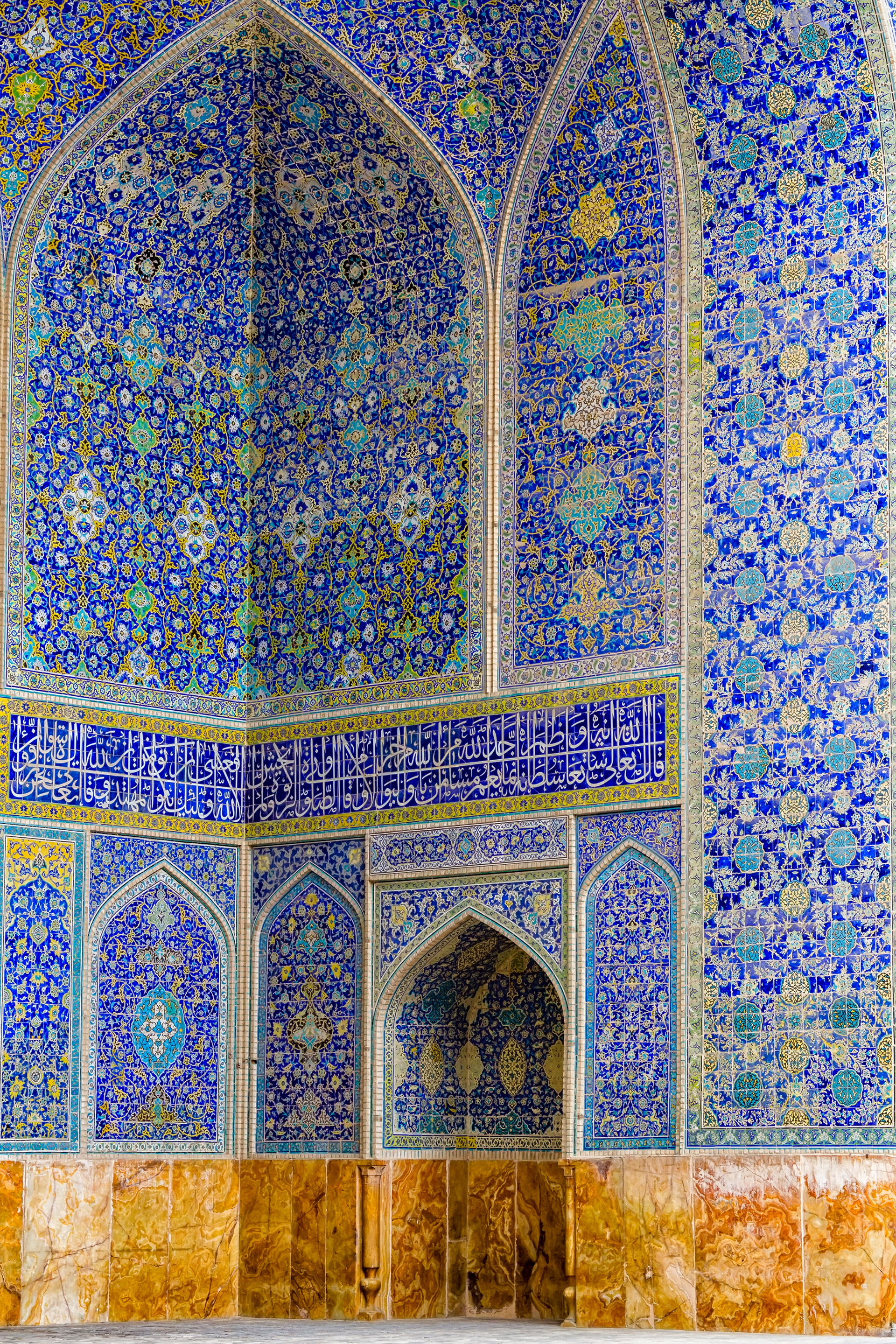
Intricate blue and turquoise tilework inside the Masjed‑e Jadid‑e Abbasi reveals the full refinement of Safavid decorative art, where dense geometric lattices, stylized floral arabesques, and sweeping bands of white thuluth calligraphy unfold across pointed‑arch panels. The upper surfaces shimmer with layered Persian blues and gold accents, while the lower walls transition to warm, polished stone, creating a deliberate contrast that grounds the luminous tilework above and emphasizes the mosque’s architectural rhythm.